Newsletter Subscribe
Enter your email address below and subscribe to our newsletter

 ByJohn A
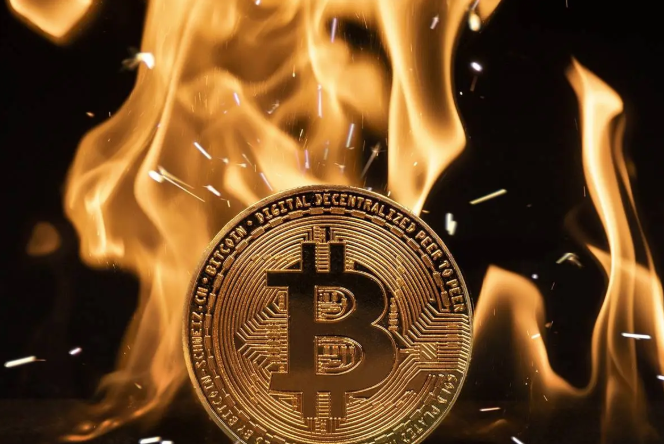
Coin burning is the deliberate removal of cryptocurrency from circulation by sending tokens to an unusable address. This action reduces effective supply and signals long-term intent within tokenomics. The mechanics, timing, and governance around burns influence market psychology and incentives. Yet questions remain about execution, durability of price impact, and potential unintended consequences. The outcome depends on how burns are implemented and interpreted by participants, leaving crucial uncertainties that merit careful examination.
Coin burning, also known as token burning, is the deliberate and permanent removal of cryptocurrency from circulation by sending it to an unusable address or account. This mechanism influences supply dynamics, investor perceptions, and potential scarcity signals.
Tokenomics skepticism and burn skepticism arise as evaluations of impact, timing, and governance, prompting critical questions about long-term value, execution risks, and market signaling without guaranteeing price appreciation.
See also: zendogtechcom
Trimming supply through token burning translates theoretical incentives into observable actions, as mechanisms specify when and how burn events occur, how transactions are processed, and what immediate and longer-term effects emerge.
In practice, triggers align with protocol rules or external signals, burning reduces supply, alters circulating supply metrics, and reshapes token economics while influencing market psychology through expected scarcity and policy clarity.
Assessing burn impact requires a structured approach to quantify how token destruction translates into measurable economic and market outcomes. The analysis advances through defined metrics: supply deflation rate, price elasticity, and liquidity shifts, tracked by consensus benchmarks. Pattern identification reveals clustering and timing effects, while outcomes measure volatility changes and adoption signals. Helper utilities standardize data pipelines and cross-asset comparability.
Given the inherent deflationary mechanics of token burning, risks arise from over-reliance on supply reduction as a sole driver of value, potential mispricing during episodic burn events, and unintended liquidity fragmentation when burning omits proportional burn-side liquidity.
The framework highlights risks and trade offs, investor responses and strategies, emphasizing disciplined risk assessment, diversified exposure, transparent burn cadence, and alignment with broader governance and market conditions.
Coin burning, while conceptually straightforward, operates like a quiet drill in a crowded market: it reduces float, reshapes scarcity, and tempts speculative revaluation. Yet the signal-to-noise ratio is volatile; a single burn event can trigger outsized moves or minimal impact depending on liquidity, utility, and narrative momentum. For investors, the decisive lesson is disciplined skepticism: quantify burn size, verify governance, and distinguish hype from durable demand signals before recalibrating risk and allocation. In essence, scarcity is not destiny without verifiable fundamentals.